



4
The evolution of Google Ads has entered a new phase. What started as manual keyword bidding has now transformed into AI-first, intent-driven advertising.
One of the most important milestones in this journey is AI Max for Search Campaigns.
When AI-driven features were first introduced in Google Ads, many advertisers—including myself—were skeptical. The fear was simple:
👉 AI would miss brand voice, messaging nuance, and funnel intent.
Fast forward to 2026, and that assumption has been proven wrong.
AI Max is not just another automation toggle. It’s a comprehensive optimization layer that combines targeting, creatives, landing pages, and reporting—while still giving advertisers meaningful control.
This guide breaks down what AI Max is, how it works, how to set it up correctly, and how to use it profitably in 2026.
What Is AI Max for Search Campaigns?
AI Max is Google’s advanced AI optimization framework for Search campaigns. It enhances traditional Search by combining:
- AI-powered search term matching
- Real-time ad copy & asset optimization
- Intent-based landing page selection
- New brand and location controls
- Deeper transparency and reporting
Unlike older automation tools, AI Max doesn’t replace Search campaigns—it upgrades them.
How AI Max Works (Core Architecture)
AI Max is built on two foundational systems:
1. Search Term Matching (Beyond Keywords)
Traditional Search relied heavily on:
- Exact match
- Phrase match
- Broad match
AI Max introduces intent-based matching, including:
- Broad match expansion
- Keywordless matching
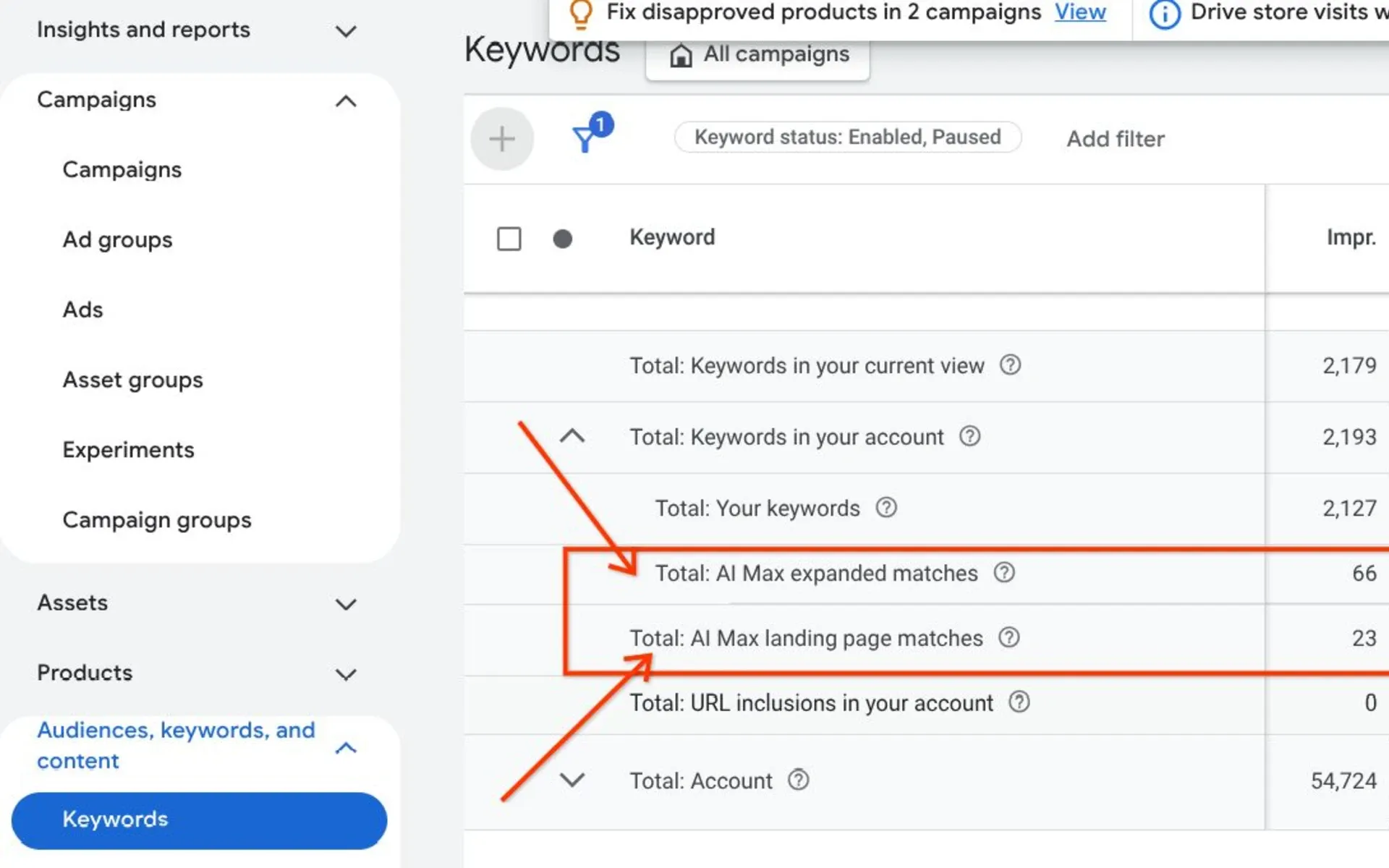
- AI Match (new match type in reports)
Google AI analyzes:
- Your keywords
- Ad creatives
- Landing pages
- Historical performance
- Real-time user intent
This allows ads to appear for high-converting searches you would never manually add.
2. Asset Optimization (Real-Time Creative Adaptation)
In older campaigns, ads were static.
With AI Max, ads adapt in real time.
AI dynamically optimizes:
- Headlines
- Descriptions
- Callouts & sitelinks
- Structured snippets
- Final messaging order
Example:
Search query:
“serum for dry sensitive skin”
Traditional ad:
“Premium Skincare Products – Shop Now”
AI Max ad:
“Serum for Dry Sensitive Skin – Unlock Your Glow Today”
This is no longer Dynamic Keyword Insertion.
This is contextual creative generation.
Final URL Expansion: Smarter Landing Page Selection
One of the most powerful (and misunderstood) AI Max features is Final URL Expansion.
Instead of sending every click to a single landing page, Google AI:
- Evaluates all relevant pages on your domain
- Matches user intent with page intent
- Sends traffic to the page most likely to convert
Why This Matters in 2026
Modern websites have:
- Multiple product pages
- Category pages
- Blog-led conversion funnels
AI Max automatically chooses:
- Serum page for serum searches
- Cream page for cream searches
- Comparison page for research intent
You don’t need separate campaigns for each variation anymore.
New Controls Introduced with AI Max
One of the biggest misconceptions is that AI Max removes control.
In reality, it introduces new types of control.
1. Brand Controls (Major Upgrade)
For the first time in Search campaigns, you can:
- Include specific brands you want to appear alongside
- Exclude competitor brands you don’t want association with
This is critical for:
- Premium brands
- Regulated industries
- Competitive verticals
You can apply brand controls at:
- Campaign level
- Ad group level
2. Location of Interest Targeting
Unlike standard geo-targeting, Location of Interest allows ads to trigger based on geographical intent, not just physical presence.
Example:
- User in UK searching “digital marketing agency Dubai”
- AI Max understands intent = Dubai
- Ad can still show
This works even with keywordless matching.
3. URL Inclusion & Exclusion
Advertisers can now:
- Include URLs AI might miss
- Exclude URLs they never want traffic sent to
Important rule:
If a more relevant URL is selected, pinned assets may be ignored.
This prioritizes conversion probability over rigid structure.
Transparency & Reporting Improvements
Automation without visibility is dangerous.
AI Max addresses this with improved reporting layers.
You now get:
- AI Match as a new match type
- Source column showing:
- Broad match expansion
- Keywordless matching
- Combined search term → headline view
- Asset reports focused on:
- Spend
- Conversions
- Conversion value
(not just impressions)
This makes AI Max auditable and scalable.
Step-by-Step: How to Set Up an AI Max Search Campaign (2026)

4
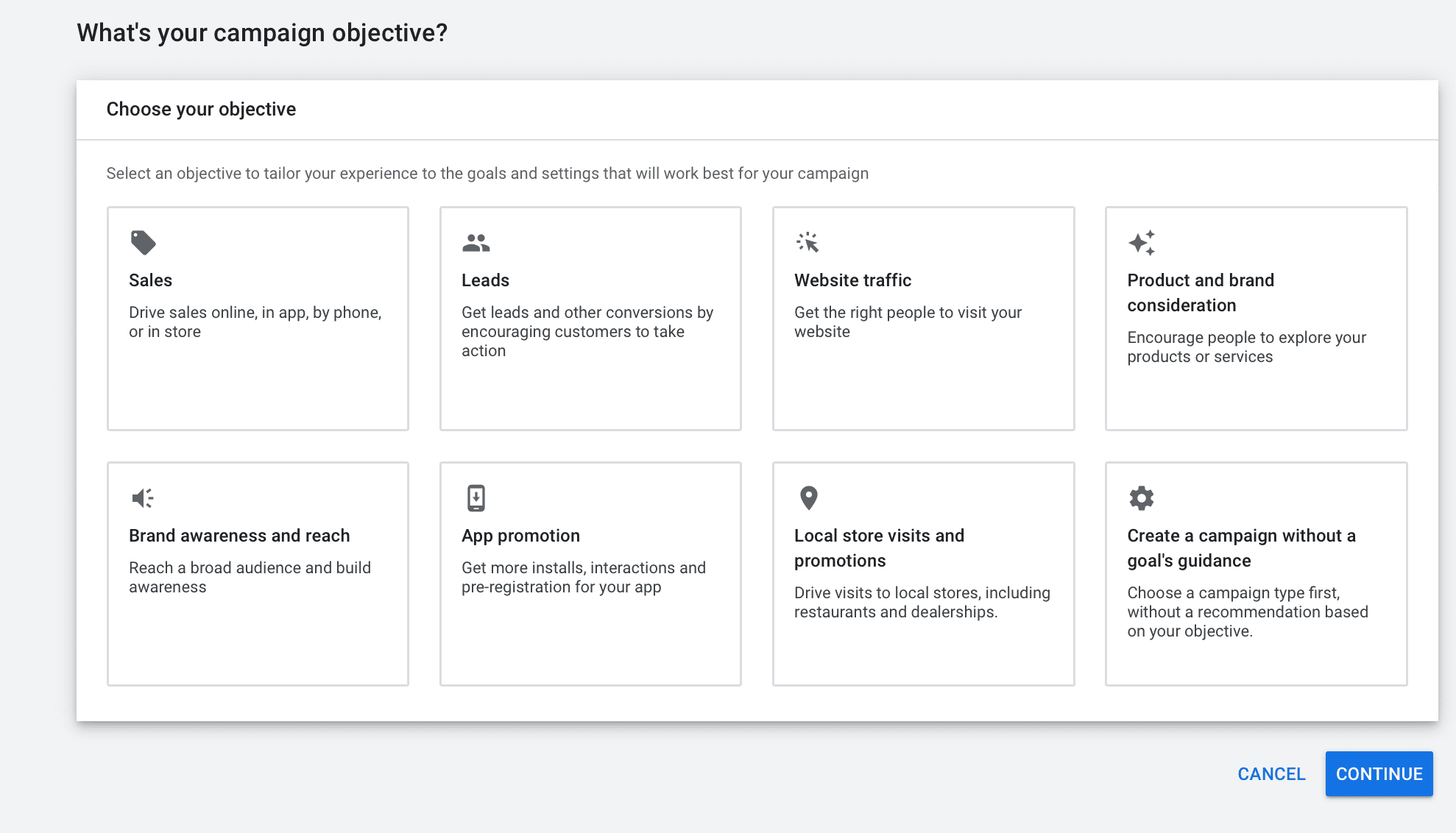
Step 1: Create a New Search Campaign
- Choose Sales, Leads, or Traffic
- Select Search as campaign type
Step 2: Set Bidding Strategy
AI Max works best with:
- Maximize Conversions
- Maximize Conversion Value
- tCPA / tROAS (for mature accounts)
Step 3: Turn ON AI Max
Enable:
- Text customization
- Asset optimization
- Final URL expansion
(Optional but recommended)
Step 4: Configure Brand Controls
- Create brand inclusion lists
- Create brand exclusion lists
Step 5: Keywords (Keep Them Simple)
- Use broad match strategically
- Let AI Max expand intelligently
- Exact & phrase still optional
Step 6: Ads & Assets
- Provide strong base headlines
- Add images
- Add sitelinks, callouts, structured snippets
AI Max will refine delivery.
Step 7: Budget & Publish
- Start with stable daily budget
- Monitor first 7–14 days before heavy edits
Best Practices for AI Max in 2026
✔ Use conversion tracking correctly (non-negotiable)
✔ Give AI enough data before judging performance
✔ Don’t over-restrict keywords
✔ Use brand exclusions wisely
✔ Review search terms weekly
✔ Focus on business outcomes, not vanity metrics
Is AI Max Worth It in 2026?
Yes—if used correctly.
AI Max is not:
❌ “Set and forget”
❌ A replacement for strategy
❌ Suitable for poorly structured accounts
It is:
✅ A performance multiplier
✅ A reach expansion engine
✅ A creative optimization system
✅ A smarter Search framework
Final Thoughts
AI Max represents Google’s long-term direction:
Search ads driven by intent, not just keywords.
Advertisers who adapt early will:
- Capture incremental demand
- Lower CPA over time
- Scale faster than competitors still stuck in manual control
If you need professional help with Google Ads audits, AI Max setup, optimization, or account recovery, my team and I provide full-service PPC management globally, with deep expertise in AI-driven campaigns.


