


If you’re running campaigns on Google Ads in 2026 and noticing that negative keywords are still generating clicks, you’re not alone.
This is one of the most misunderstood Google Ads behaviors in 2026, especially after Google’s continued shift toward intent-based matching and automation.
Let’s break it down clearly.
Real 2026 Example: Negative Keywords Still Triggering Ads
A very common real-world scenario:
- Negative keyword added: 2026 (broad)
- Campaign keywords: Phrase match
- Actual search term triggering click:
👉 interior design trends 2026
Another example:
- Negative keywords: color, platter
- Search term triggering click:
👉 interior design color platter
At first glance, this looks like a setup mistake.
In reality, this is expected Google Ads behavior in 2026.
Why Negative Keywords Behave Differently in 2026
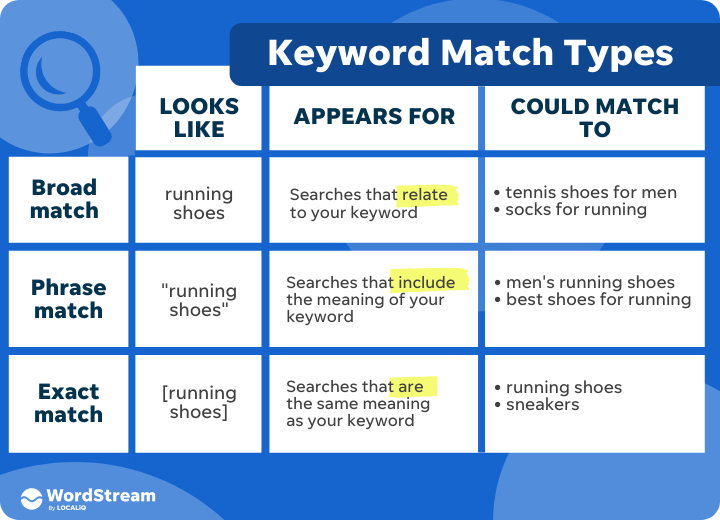
Google Ads no longer matches keywords purely by text.
In 2026, Google heavily relies on:
- Search intent
- Semantic meaning
- Contextual relevance
- Machine learning predictions
This applies to:
- Broad keywords
- Phrase keywords
- Negative keywords
👉 Negative keywords do NOT work like they did years ago.
The Core Issue: Phrase Keywords vs Broad Negative Keywords
Most advertisers today have this setup:
- Positive keywords: Phrase match
- Negative keywords: Broad match (default)
This creates conflicting intent signals.
Why Google Still Shows Ads
Even if:
2026is added as a broad negative
Google may still allow:
- interior design trends 2026
Because:
- The phrase keyword intent is strong
- The system believes the user intent is still relevant
- Broad negatives do not always block phrase-level context
This is by design, not a bug.
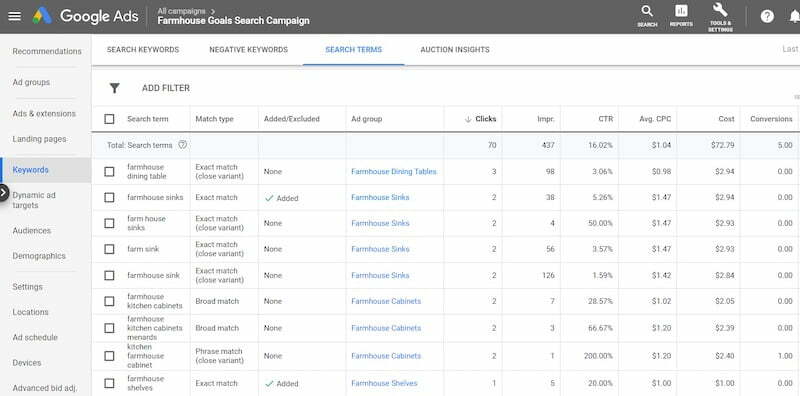
Negative Keywords Must Be Managed from Search Terms (2026 Rule)
If you’re still adding negatives once and forgetting about them — that strategy no longer works in 2026.
Correct Process in 2026
- Open Search Terms Report
- Identify exact queries triggering ads
- Add entire search queries as negatives
- Repeat weekly (or daily for high-spend accounts)
Example Fix
Instead of only adding:
- ❌
2026
Also add:
- ❌ interior design trends 2026 (negative)
This gives Google zero room for interpretation.
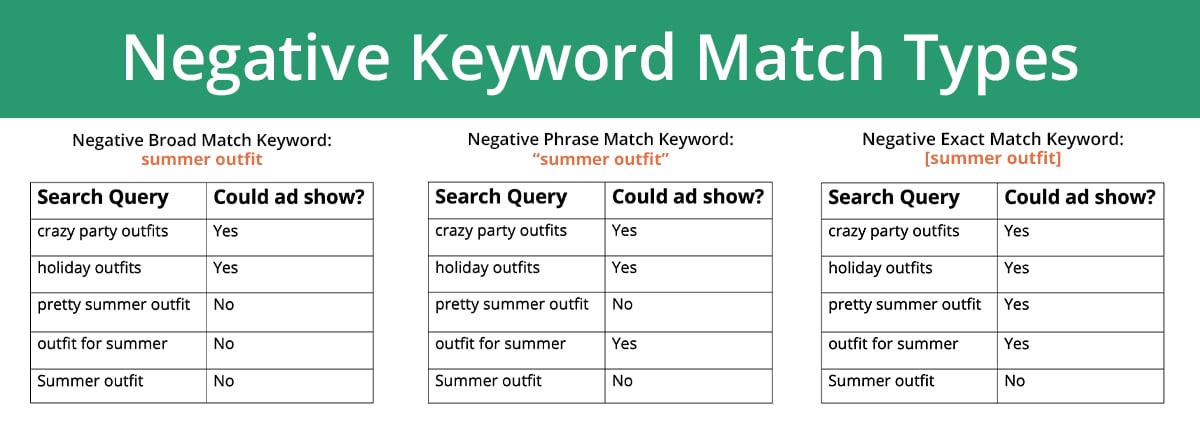
Broad vs Phrase vs Exact Negative Keywords (2026 Reality)
Here’s how negatives perform today:
| Negative Type | Reliability |
|---|---|
| Broad | ❌ Weak alone |
| Phrase | ⚠️ Can conflict |
| Exact | ✅ Most precise |
👉 Exact negative keywords are the safest option in 2026
Why Phrase Negatives Still Fail in 2026
Another issue I see frequently:
- Running keywords → Phrase match
- Negative keywords → Phrase match
This creates overlap and contradiction.
Google may still:
- Prioritize traffic
- Favor intent
- Ignore partial negative signals
Professional Fix
👉 Move high-risk keywords from Phrase → Exact match
This removes ambiguity and wasted spend.
Best Google Ads Negative Keyword Strategy for 2026
This is the strategy we use when managing accounts professionally:
- High-intent keywords → Exact match
- Supporting keywords → Phrase match
- Weekly search term audits
- Add full queries as negatives
- Avoid single-word negatives as your only defense
This approach:
- Reduces irrelevant clicks
- Improves conversion quality
- Lowers wasted ad spend
Final Verdict (2026)
If negative keywords are still getting clicks:
- ❌ It’s not a Google Ads bug
- ❌ It’s not an account error
- ✅ It’s modern keyword matching logic
The solution is precision, not more negatives.
Need Expert Google Ads Management?
If you’re tired of wasted spend and unpredictable traffic:
We’re a Google Partner company based in UAE, managing Google Ads globally.
👉 Hire me & my team through AliRaza.co
🔗 Recommended Reading on AliRaza.co
- SEO vs PPC – What Works Best in 2026
- Google Ads Case Study – 156% ROI
- Google Ads Account Suspended – Recovery Guide
If you want next:
- ✅ Meta title & description (2026 SEO)
- ✅ FAQ schema for featured snippets
- ✅ Internal linking map
- ✅ Conversion-optimized CTA section
Just say the word 👍


